One focused hour can produce a useful prospect list when the selection criteria are clear. Speed comes from removing ambiguity before opening the database.
A practical framework
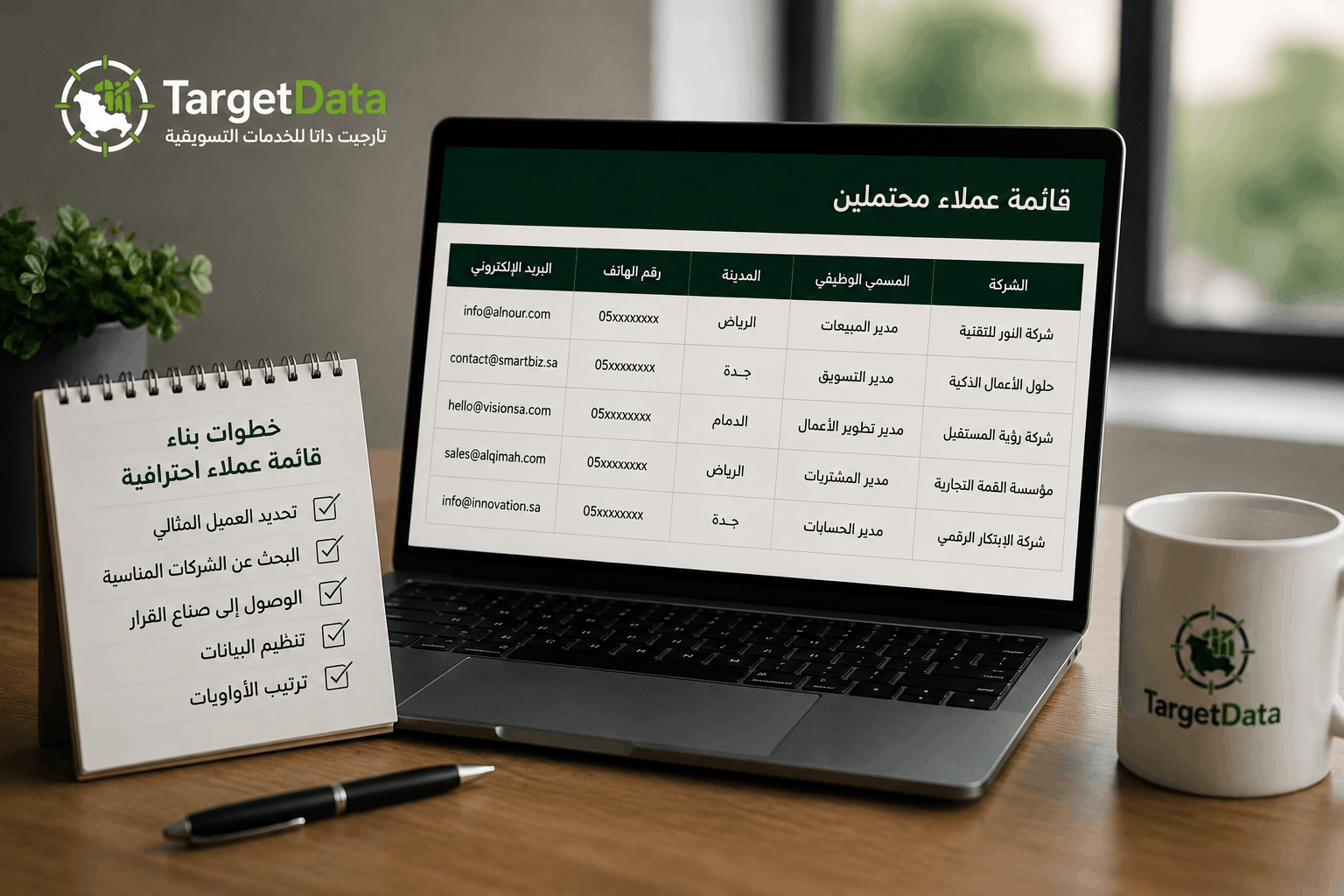
Use the following steps as a working checklist. Adapt the order and level of detail to your market, offer, and compliance requirements.
- Use the first ten minutes for criteria: Define industry, location, role, size, and the reason for fit.
- Collect only essential fields: Include the information needed for research and first contact.
- Remove obvious noise: Deduplicate and exclude irrelevant or incomplete records.
- Add a priority score: Rank prospects by fit, likely need, and potential value.
- Reserve time for outreach planning: Write the opening message and define the next step.
Measure before you scale
Track delivery, response, qualification, meeting, and conversion rates. Review the numbers by segment so that a strong result in one audience does not hide weak performance elsewhere. Keep only the channels and messages that produce qualified opportunities.
Responsible use of data
Use business and contact data lawfully and professionally. Respect privacy, local regulations, consent requirements, and the policies of every communication platform. Give recipients a clear way to opt out and keep suppression lists up to date.
Conclusion
A professional list is small enough to understand and strong enough to act on. Quality criteria turn a quick research session into a usable sales asset.