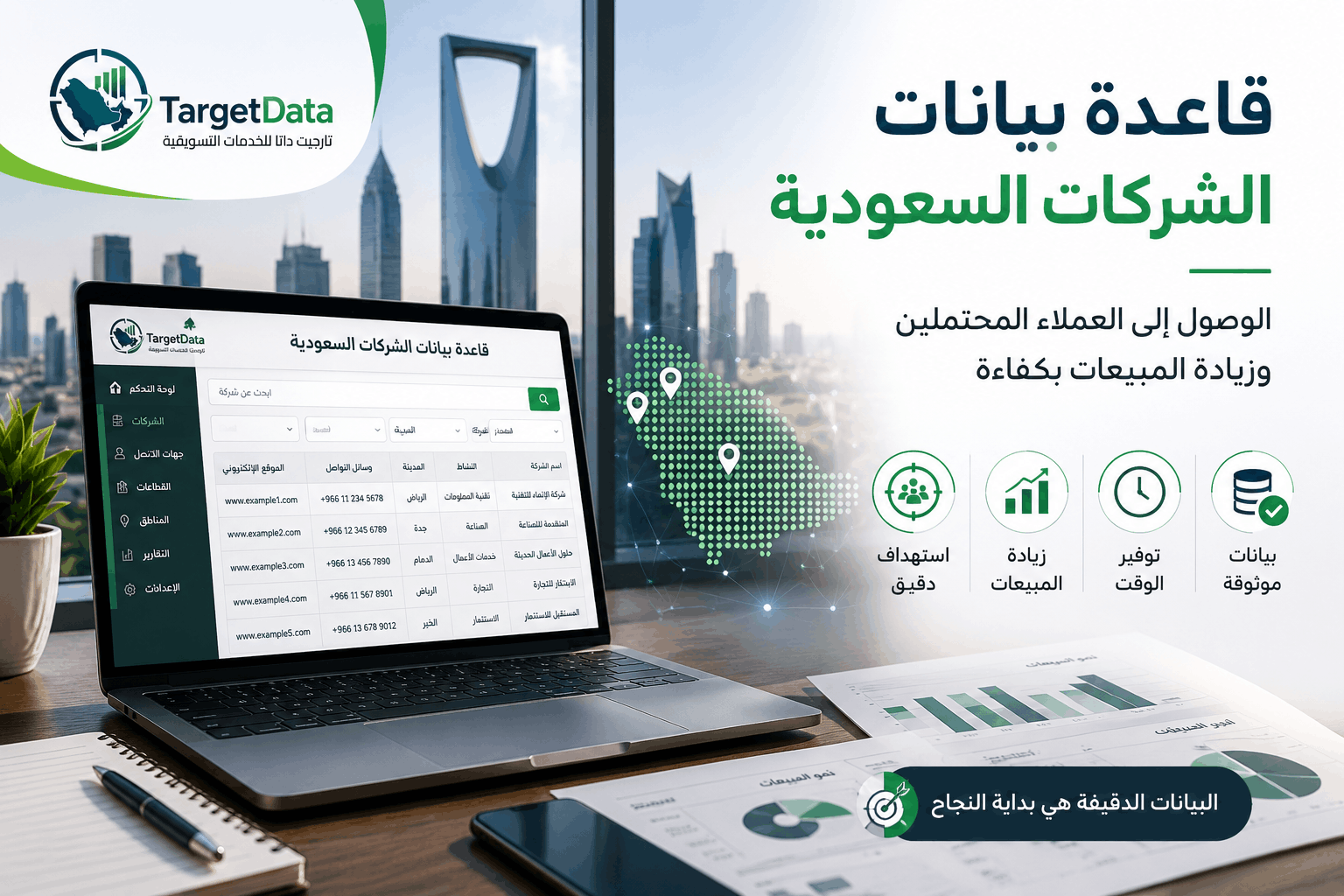
A Saudi companies database can reduce research time and help sales teams organize market coverage. Its value depends on the available fields, update quality, relevance, and the process used after a record is selected.
A practical framework
Use the following steps as a working checklist. Adapt the order and level of detail to your market, offer, and compliance requirements.
- Define the market: Specify the industries, cities, company types, and roles you need.
- Assess useful fields: Check whether the database supports the filters your workflow requires.
- Validate samples: Review representative records before launching a large campaign.
- Create account segments: Group companies by a business reason, not only by geography.
- Connect data to a sales process: Assign research, contact, qualification, follow-up, and reporting stages.
Measure before you scale
Track delivery, response, qualification, meeting, and conversion rates. Review the numbers by segment so that a strong result in one audience does not hide weak performance elsewhere. Keep only the channels and messages that produce qualified opportunities.
Responsible use of data
Use business and contact data lawfully and professionally. Respect privacy, local regulations, consent requirements, and the policies of every communication platform. Give recipients a clear way to opt out and keep suppression lists up to date.
Conclusion
Use the database to make prospecting more deliberate. The strongest outcome is a repeatable process that helps the team find and develop the right opportunities.